






Group Leader: prof. Ing. Václav Švorčík, DrSc.
Core team member: doc. Mgr. Oleksiy Lyutakov, Ph.D.
Researchers: Mgr. Elena Miliutina., Ph.D. Assistants: Ing. Andrii Trelin, Ph.D.
Mgr. Vasilii Burtsev, Ph.D. Mgr. Vladislav Buravet, Ph.D.
Ph.D. students: Ing. Karolína Kukrálová Students: Bc. Aneta Krejčová
Ing. Kamil Severa Bc. Václav Roubal
Ing. Jana Rosenkranzová Bc. Adam Hejna
Ing. František Hošek Bc. Sára Šimčáková
Bc. Adam Fritcher
Research Focus Areas
-
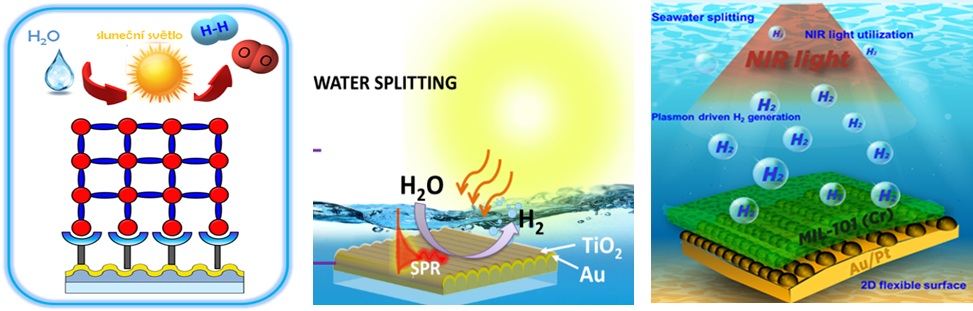
Solar-driven H2 production via water splitting
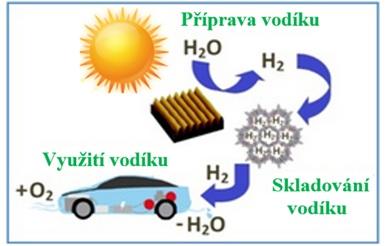
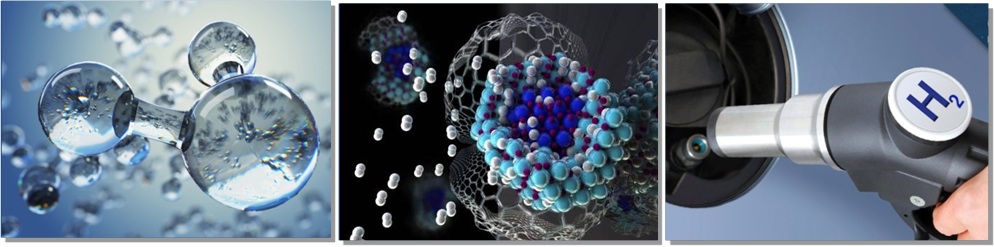
The alternative energy sector has recently been focusing on the use of "green" hydrogen as an energy source, primarily due to its high energy capacity—which vastly exceeds that of conventional fossil fuels—its high level of environmental compatibility, and the ability to avoid carbon emissions.
The proposed coatings will find application in the preparation of catalytic layers for electrochemical or photo-electrochemical water splitting and the production of "green" hydrogen.
-
Safe storage of H2 in organic structures
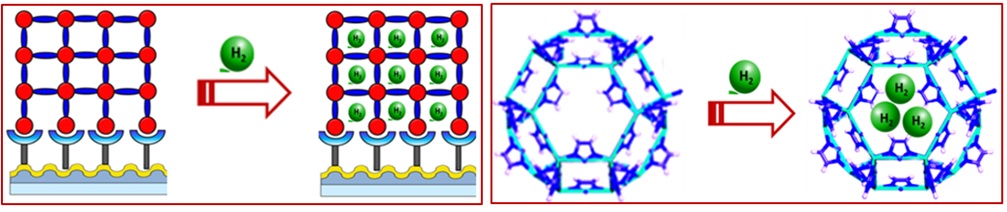
Hydrogen technology is largely constrained by unresolved challenges, with safe hydrogen storage being a critical issue. Currently, hydrogen is stored either in compressed form or within intermetallic compounds, where it binds chemically.
We are investigating the potential for hydrogen storage in organic structures known as MOFs (metal-organic frameworks) and COFs (covalent organic frameworks)—specifically, storage achieved through the design of smart, highly porous structures. In both cases (MOFs and COFs), we will utilize the ability to externally switch the material's affinity for hydrogen. This approach enables a combination of high storage capacity and the subsequent ease of hydrogen release. Our goal is to develop materials and methods that address fundamental challenges in hydrogen storage and transport: achieving high capacity alongside safe storage and easy release.
-
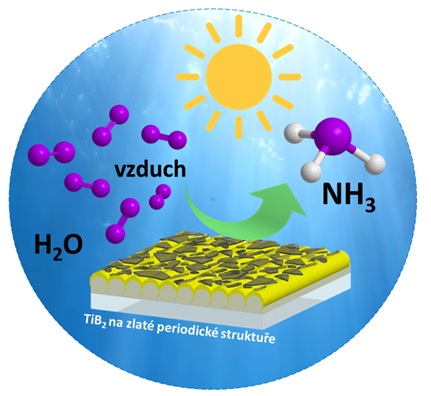
Solar-driven preparation of NH3 from water and atmospheric N2
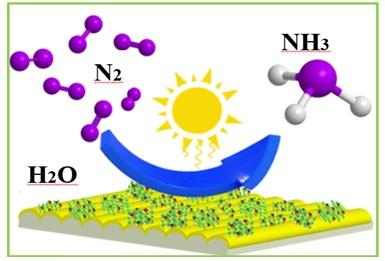
One of the most attractive solutions in the modern energy sector is the use of ammonia as a natural carrier for green hydrogen. Like hydrogen, pure ammonia can be produced through a water-splitting reaction in the presence of nitrogen, utilizing electrochemical or photo-electrochemical processes. The result is a substance that is easy to store and transport, and from which "green hydrogen" can be relatively easily released and utilized. This approach bypasses one of the fundamental challenges of hydrogen technology: storage and transport. For this very reason, ammonia-based green technologies are considered the future of green energy, and their development is growing exponentially.
-
Solar-driven preparation of alcohols and carbonates from CO2
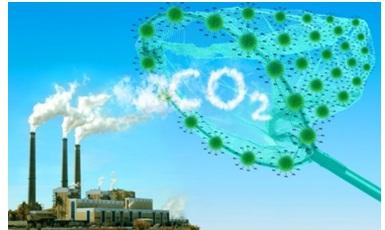
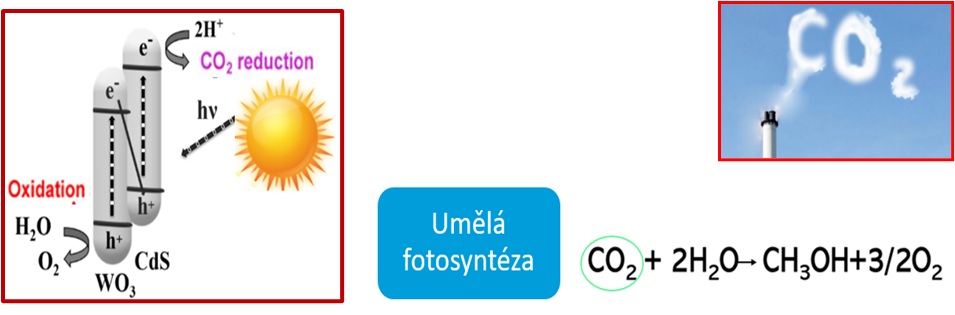
Among the various greenhouse gases contributing to climate change, studies indicate that carbon dioxide (CO2) has the greatest impact on our climate; it creates a greenhouse effect that traps thermal radiation in the Earth's atmosphere, raises temperatures, and drives phenomena such as melting glaciers, rising sea levels, the loss of native vegetation, and many others. Converting CO2 into valuable chemicals is an effective strategy for mitigating the negative environmental impact of human activity. Recently, the potential use of alcohols as fuel for fuel cells has been a subject of research. Consequently, we are investigating the synthesis of material structures that, upon exposure to sunlight in the presence of water, produce alcohol through a process known as "artificial photosynthesis" (the Z-scheme).
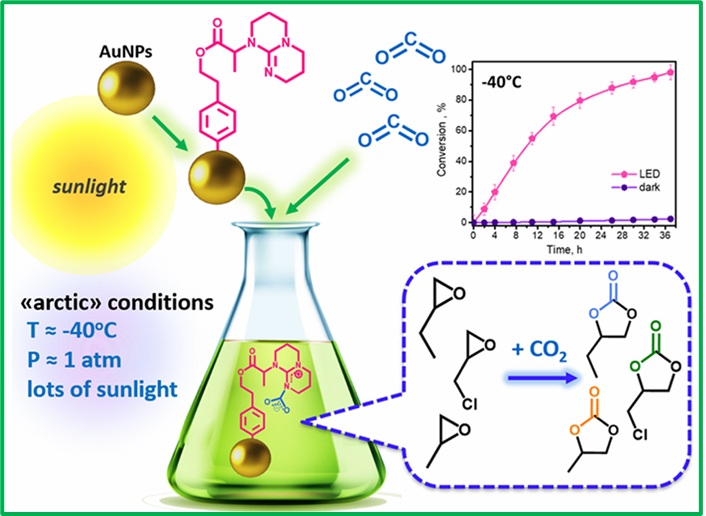
We are investigating plasmon-assisted CO2 activation at temperatures well below zero (involving an increase in CO2 concentration within the reaction medium at reduced temperatures). Plasmon-assisted CO2 activation at low temperatures enables the use of solar energy alone—a significant advantage for certain remote or unusual locations (such as polar regions or areas in Europe and North America where other energy sources are unavailable). Given the global population growth, the depletion of non-renewable resources, and the abundance of sunlight in polar regions during parts of the year, this proposed approach holds promise for the future. Specifically, we are studying the synthesis of monomers from CO2 (starting from epoxides)—suitable for the subsequent production of polymers (such as carbonates)—even at low temperatures.
Projects underway:
- OP JAK, JAK_Amulet, No. CZ.02.01.01/00/22_008/0004558 (2024–2028); team member: V. Švorčík; title: Advanced Multiscale Materials for Key Enabling Technologies
- OP JAK, JAK_ECO&Stor, No. CZ02.01.01/00/22_008/0004617 (2024–2028); team member: V. Švorčík; title: Energy Conversion and Storage
- TA CR, TS01030138, (Théta 2) (2024–2029); Principal Investigator: V. Švorčík; Title: Development of advanced photocatalytic technologies for low-energy storage and reconversion of energy from "green hydrogen" via ammonia
- Just Transition Operational Programme, GET CENTRE UJEP, No. CZ.10.02.01/00/22_002/0000289 (2025–2027); co-investigator: V. Švorčík; title: Research and Development of New Hydrogen Technologies.